Custom manufacturing · OEM & ODM
You give us the drawing. We give you the product.
From aluminum extrusion through machining, welding and surface treatment, to furniture components and finished goods. This page explains exactly how that runs, step by step, so you know what you are agreeing to before you commit.
The process
Eight steps from idea to container
Every one of these has a deliverable you can see. Nothing goes into a black box for six weeks.
Drawing or idea
Send a DWG, DXF, STEP or PDF — or a physical sample, a competitor's product photo, or a dimensioned sketch on paper. Many of our best programmes started as a phone photo and a target price.
Feasibility review
Our engineers check whether it can actually be extruded and fabricated: wall thickness balance, tongue ratios, corner radii, welding access, assembly logic and how the finish will behave. If something will be expensive forever, you hear it now.
Quotation
Tooling cost, unit price, MOQ and lead time, itemised. Where a design change would meaningfully cut cost, we quote both versions so the choice is yours.
Mold / prototype
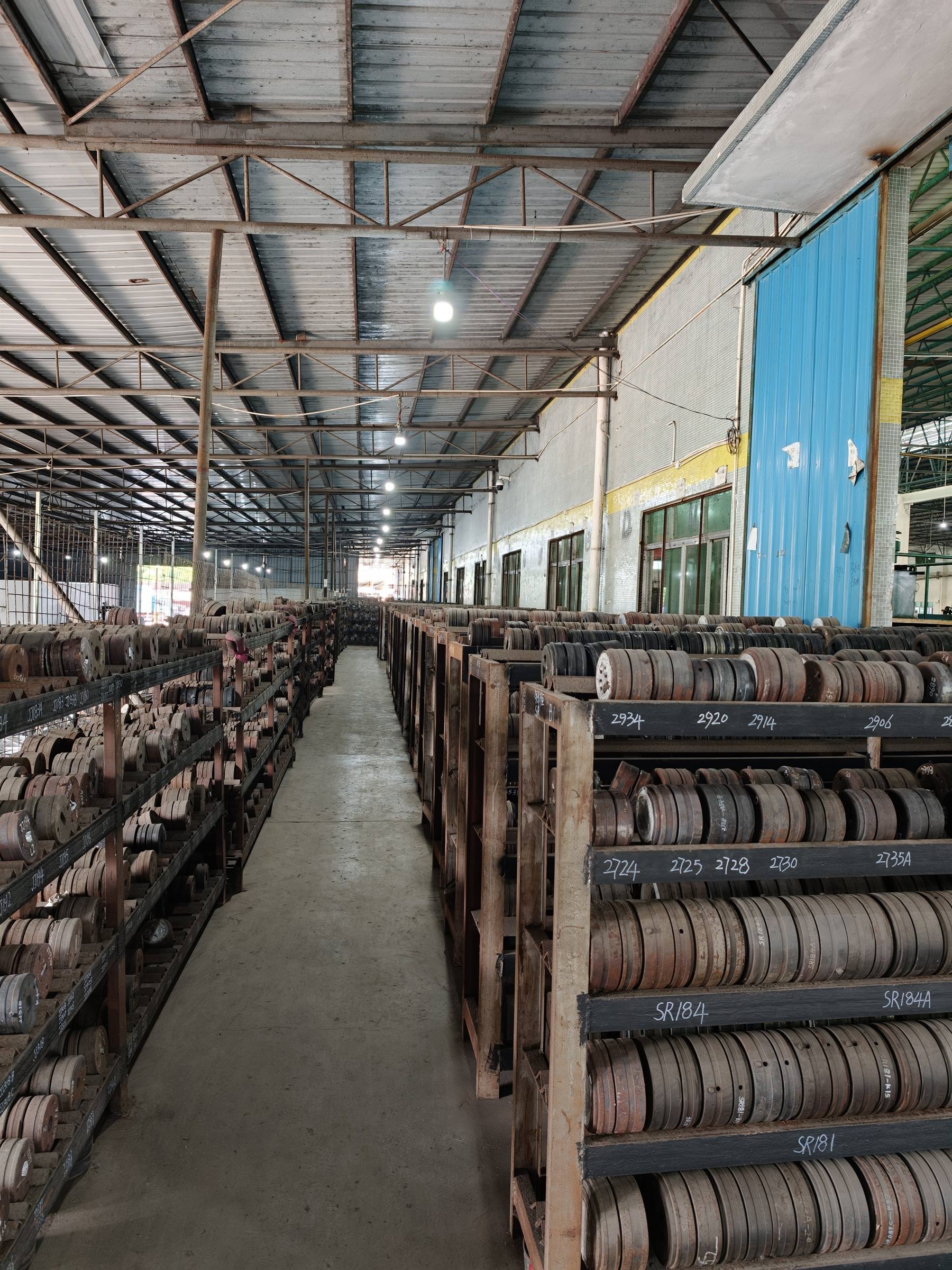
Dies are designed and cut in-house — typically about five days from approved drawing — with fabrication fixtures built alongside. First articles follow 7–15 days later, off production tooling rather than a one-off prototype process that behaves differently at volume.
Sample approval
You receive samples to measure, load test, fit to your cushions and put in front of your buyers. Changes are made and re-sampled before the line is committed.
Mass production
Scheduled across the plants that best suit the process mix and your delivery date, with production status reported as the run progresses.
Quality inspection
Incoming material, extrusion, dimensional, welding, surface, assembly, packaging and pre-shipment checks — documented, with photographic reports.
Shipping
Packed, labelled, documented and despatched. Production routing is evaluated based on product requirements, capacity, lead time and applicable trade requirements.
Scope of customisation
The six things buyers change most
If your requirement is not on this list, it is probably still possible. Ask.
New mold development
New extrusion dies and fixtures, designed, cut and catalogued in-house for your programme.
Custom dimensions
Seat heights, depths, module grids and table sizes set by your drawing rather than our catalogue.
Custom aluminum profiles
Cross-sections extruded specifically for your product family, owned by your programme.
Custom finishes
Colour matching, matte and textured powder coats, wood-grain transfer and anodized finishes.
Custom packaging
Carton structure and print, foam tooling, retail-ready packs and drop-ship-rated cartons.
Private label
Your brand, your labels, your barcodes, your documentation. We stay behind the scenes.
Engineering support
The review that saves you money
Most cost problems in outdoor furniture are designed in, not manufactured in. By the time a die exists, the unit price is largely decided.
So the feasibility review is not a formality. We look for wall thickness that is heavier than the load requires, sections that could be consolidated, weld joints that could be eliminated, and finish specifications that are fighting the geometry.
You are free to ignore every suggestion — plenty of customers have design reasons we cannot see from a drawing. But you will have seen the trade-off before you pay for tooling.
- Extrudability and tooling risk assessed before cutting a die
- Part consolidation and weld reduction proposed where possible
- Material and temper matched to the actual load case
- Finish specified for the environment, not a generic standard
- Packaging reviewed against container cube and drop-test needs
Start with whatever you have.
A drawing, a sample, a photo, or three sentences describing the problem. Every RFQ gets a reply within one business day.